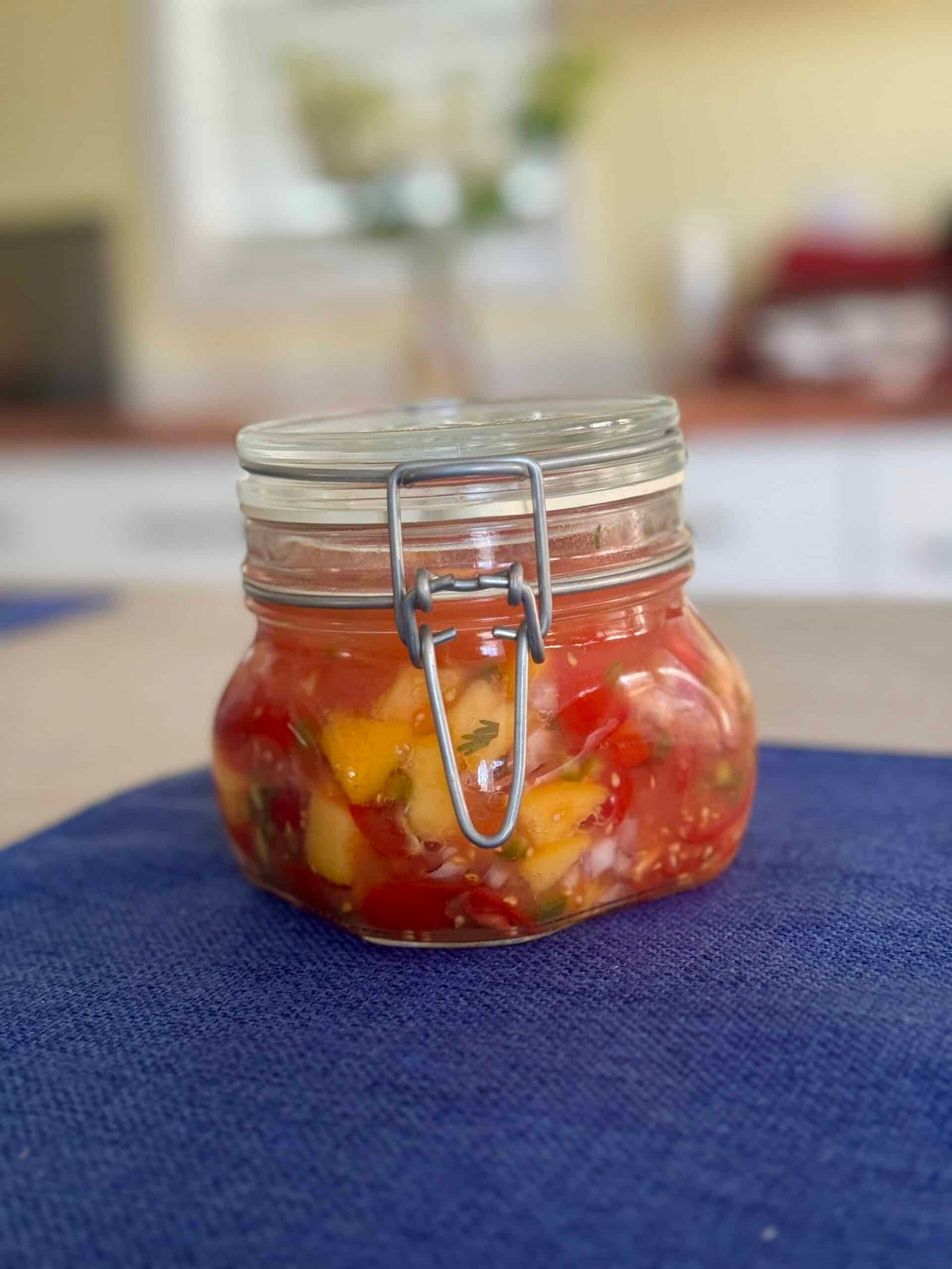
Fermented Peach and Tomato Salsa
© Chef Laura Bonicelli
Tangy-sweet bubbles of fermented peach mingle with bright tomatoes and a whisper of jalapeño heat in this vibrant salsa. The gentle fermentation deepens every flavor while adding a subtle fizz that dances on your tongue — spectacular with grilled fish or simply scooped up with tortilla ...
Prep Time
30 min
Cook Time
72 hr
Total Time
72 hr 30 min
Servings
8 servings
Ingredients
salsa
- 8 ripe Roma tomatoes, about 1½ pounds, diced
- 4 ripe peaches, about 1 pound, peeled, pitted, and diced
- 1 small red onion, diced
- 2 - 4 jalapeño peppers, stemmed, seeded (optional), and finely diced
- Juice of 2 limes
- 2 teaspoonskosher salt
- 2 tablespoonschopped cilantro leaves
to finish
- 1 cupfiltered, non-chlorinated water
Instructions
- 1
- 2
Wash 2 to 3 pint-sized jars and their lids with rings in hot, soapy water. Rinse thoroughly.
- 3
- 4
In a non-reactive bowl, combine the diced tomatoes, peaches, red onion, jalapeños, lime juice, salt, and chopped cilantro. Mix well.
- 5
- 6
Using a spoon, pack the salsa mixture into the prepared jars, pressing down to eliminate air pockets. Leave a 1½-inch headspace at the top.
- 7
If using fermentation weights, place them on top of the salsa to keep the ingredients submerged.
- 8
Pour filtered, non-chlorinated water into each jar, leaving a 1-inch headspace.
- 9
- 10
Secure the lids on the jars. Place the jars in a cool, dark area away from direct sunlight.
- 11
Allow the salsa to ferment at room temperature for 2 to 3 days. During this period, release the pressure by briefly loosening the lids twice daily. This is usually a very active fermentation. Keep an eye on it.
- 12
- 13
Once the salsa becomes bubbly and has a tangy aroma, remove the fermentation weights (if used) and transfer the jars to the refrigerator to halt the fermentation process.
Nutrition Facts
Per Serving (serves 8 servings)
* Nutritional information is estimated and may vary based on specific ingredients and preparation methods.
Chef's Notes
peeling peaches: To easily peel peaches, blanch them in boiling water for 30 seconds, then transfer to an ice bath. The skins should slip off effortlessly. fermentation weights: While not mandatory, using fermentation weights helps keep the ingredients submerged, reducing the risk of mold. water quality: Always use filtered, non-chlorinated water for fermentation, as chlorine can inhibit the growth of beneficial bacteria. store: Store the fermented salsa in the refrigerator and consume within 3 months for optimal flavor and safety.